Lighting Is Mood. Mood Is Feeling. Feeling Sells.
Lighting Is Mood. Mood Is Feeling. Feeling Sells.
Of all the elements that make a product image work, lighting is the most powerful.
It’s also the most invisible when it’s right — and the most damaging when it’s wrong.
What Lighting Actually Does
Lighting doesn’t just illuminate a product.
It tells the buyer how to feel about it.
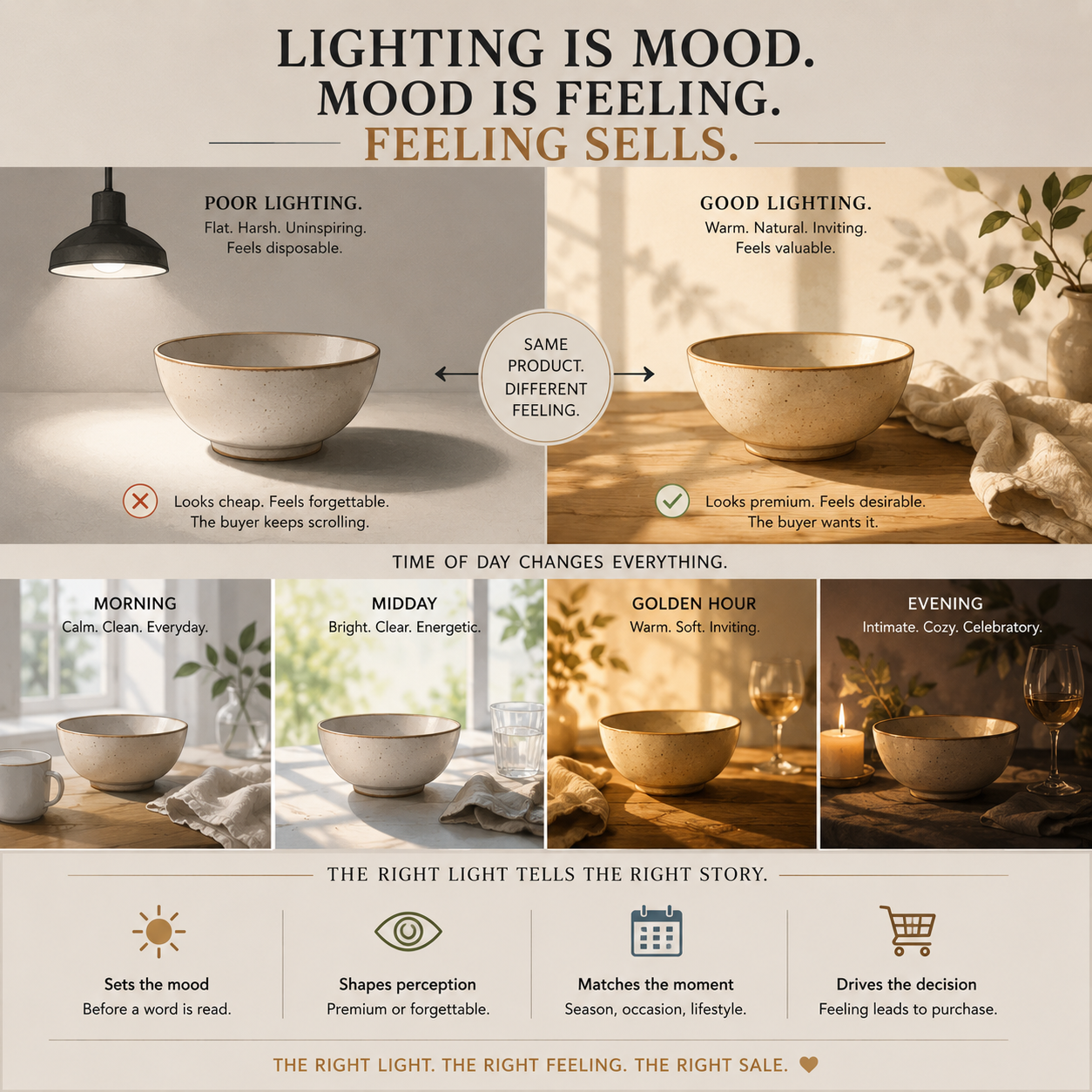
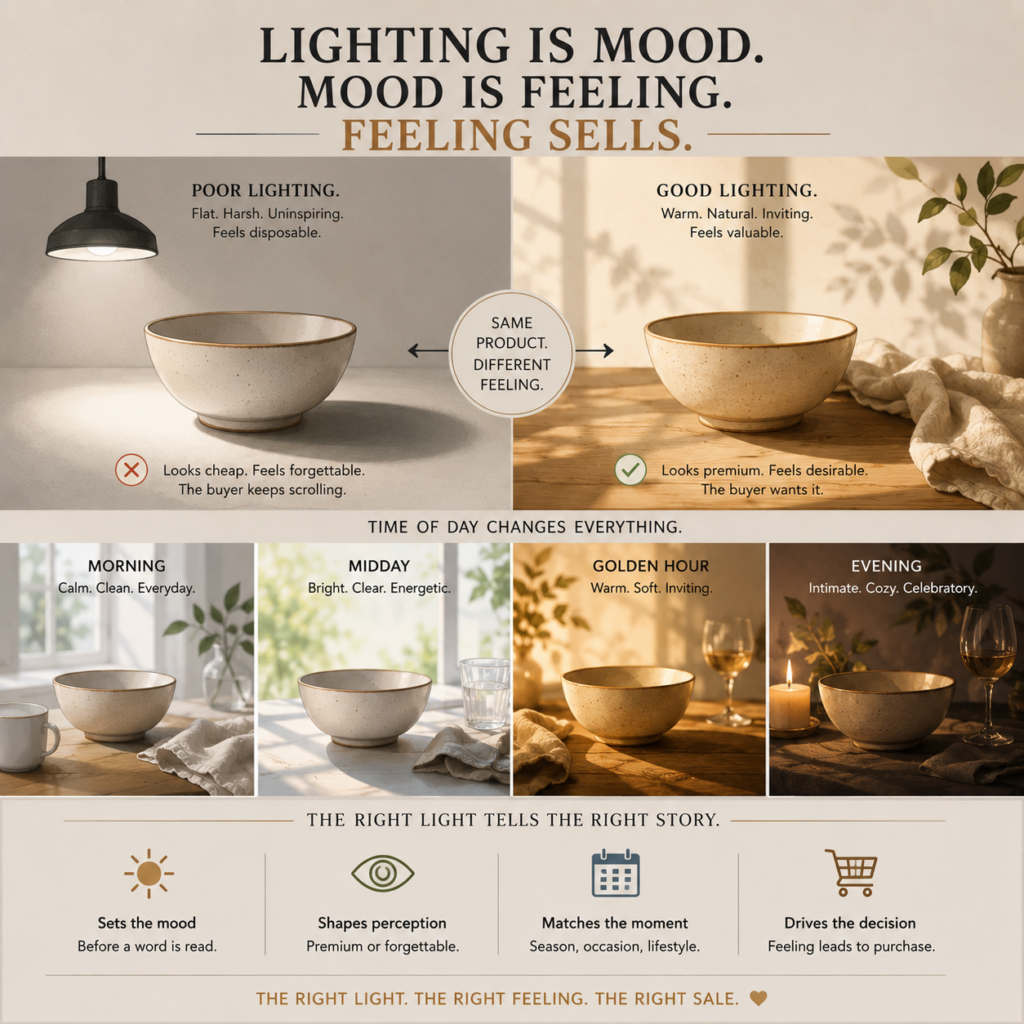
Warm, directional light says: this is a Sunday morning. Slow down. This belongs here.
Flat, harsh light says: this is a warehouse. Move along.
The product is identical in both images. The buying response is not.
That emotional signal — warmth, intimacy, clarity, occasion — happens before the buyer reads a single word of description. Before they check the price. Before they decide if it fits their store.
Lighting sets the stage. Everything else follows.
What Bad Lighting Costs You
Bad lighting doesn’t just make a product look unflattering.
It repositions your brand.
A piece that retails for $80 looks like a $20 piece under flat overhead light. A handmade ceramic that took hours to produce looks mass-manufactured under the wrong exposure.
The buyer doesn’t think: “the lighting is off.”
They think: “this doesn’t feel premium.”
And they move on.
That perception gap — between what your product actually is and what your image communicates — is where sales are lost. Not to competition. Not to price. To a feeling that never got a chance to land.
Natural Light vs. Artificial Light
Both work. Both have a place.
The question is what each one communicates — and whether it matches what your product needs to say.
Natural Light
Natural light is generous, variable, and alive.
It creates:
- Soft shadows that suggest depth without drama
- Warmth that reads as approachable and real
- A sense of time and place that studio light can’t replicate
It’s the light of a kitchen window in the morning. A patio table at golden hour. A dining room in the late afternoon.
For tableware, ceramics, and home goods, natural light is often the most persuasive choice. It puts the product exactly where the buyer imagines using it.
Artificial and Architectural Light
Studio and architectural lighting gives you control.
It creates:
- Consistent, repeatable results across a full collection
- Drama and precision for hero shots
- The ability to shoot any scene at any time of day
It’s also expensive to set up correctly. Professional lighting equipment, rigging, and the expertise to use it are a significant part of what drives traditional shoot costs into the thousands.
The right lighting isn’t about which source — it’s about whether the light serves the product’s story.
Time of Day Changes Everything
The same scene shot at different times of day tells a completely different story.
Morning light — soft, directional, slightly cool — communicates calm, routine, everyday ritual. A coffee mug in morning light feels like a daily necessity.
Midday light — bright, even, high contrast — communicates energy and clarity. Clean lines read sharply. Colors appear true.
Late afternoon and golden hour — warm, raking, deeply directional — communicates warmth, occasion, and desire. A table set in golden hour light feels like an invitation.
Evening and candlelight — intimate, low, dramatic — communicates luxury and celebration. The same dinnerware that reads casual at noon reads aspirational at dusk.
Your product isn’t one thing. It belongs in multiple moments. The light that captures each moment is what makes the buyer feel it.
Seasonality Lives in the Light
Winter light is blue and quiet. Summer light is warm and abundant. Spring light is soft and optimistic. Fall light is golden and fleeting.
Each season creates a different emotional context for the same product — and retail buyers plan their orders around those contexts 4 to 6 months in advance.
A holiday table needs the warm, low light of a winter evening. A spring collection needs the soft, diffused light of an overcast morning. A summer entertaining line needs the long, golden light of an outdoor evening.
If your imagery is locked to one lighting condition, you’re locked to one season — and one story.
Your Pieces Deserve Their Best Light
The brands that command premium retail placement — and premium prices — invest in lighting that matches the quality of what they make.
Crate & Barrel doesn’t shoot a $120 bowl under a phone camera and a ceiling fixture. Neither does Pottery Barn. Neither does any brand whose imagery makes you stop scrolling.
Professional architectural lighting and location shoots deliver that quality. They also cost $3,000 to $8,000 for a single day, in a single setting, in a single season.
Your pieces deserve that quality of light. Every pattern. Every collection. Every season.
Not just once — consistently, on a timeline that serves your buyers, not your budget.
The Simplest Way to Say It
Light is the first thing a buyer feels. It happens before they think. It shapes everything that comes after.
Get the light right, and your product stops competing on price. It starts competing on feeling.
That’s where the best home brands live. That’s where yours should too.
Go483 builds lifestyle image systems for wholesale home and tableware brands — any setting, any season, any light. Learn how it works.